
Protohistoric — What the Archaeological Remains Reveal —
Kumage District, located in eastern Yamaguchi Prefecture and including the Iwata area, was one of the most critical regions supporting the westward expansion of the Yamato polity in ancient Japan. In antiquity, a maritime route known as the “Old Yanai Channel (Karato Channel)” once existed here. The local clans who controlled this channel exercised power through mastery of maritime transportation and advanced salt-production technologies, establishing an independent and prosperous regional authority.
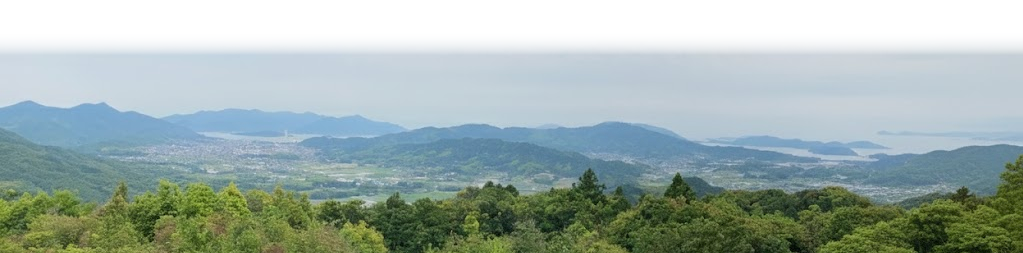
The Prosperity and Reality of Kumage
—From Indigenous Power to Incorporation into the Yamato State-
1. Foundations of Prosperity Created by Natural and Geographic Conditions
The Kumage region, including Iwata, benefited from abundant forests, rivers, and a mild climate, making it highly suitable for permanent settlement from ancient times.
This environment ensured stable agricultural productivity and supported a long-lasting sedentary society.
Of particular geopolitical importance was the presence of the “Old Yanai Channel.”
Due to marine transgression in antiquity, seawater penetrated far inland, forming calm, channel-like inlets that served as natural harbors.
In an era dominated by coastal navigation, these sheltered waterways held exceptional strategic value.
Located at the innermost reaches of these inlets, Kumage functioned as a safe anchorage and logistics hub.
By directly linking inland agricultural zones with maritime transport networks, the region established itself as a critical node of distribution, distinct from surrounding areas.
2. Archaeological Evidence of Daily Life and Social Structure
Even before the full centralization of the Yamato state in the early 8th century, the Kumage area already contained a dense concentration of settlements and daily-life remains.
Numerous pit dwellings, post holes, ditches, and pits indicate an exceptionally high density of habitation.
This contrasts sharply with frontier regions marked by military instability and instead demonstrates the existence of a mature, stable society.
These remains represent a continuous accumulation of human activity dating back to the Yayoi period or earlier.
They reveal a long-maintained, production-based sedentary society that endured for centuries.
The spatial continuity of multiple settlements suggests that Kumage was not a single village but a highly integrated regional living and production sphere.
This multilayered social structure formed the foundation of the authority that later enabled the construction of large-scale burial mounds.
3. Formation of Regional Clan Power
Supported by stable living conditions and high productivity, Kumage saw the emergence of a managerial elite that oversaw land, water resources, and transportation.
Notably, while monumental kofun are relatively limited, everyday life remains are abundant.
This suggests that local leaders emphasized administrative and economic control over purely symbolic or military domination.
These clan leaders coordinated agricultural production, mediated inter-settlement relations, and managed maritime traffic along the Old Yanai Channel.
Through such practical governance, Kumage had already developed into a semi-autonomous political unit prior to the direct intervention of central authorities.
4. Political Implications of the Name “Kumage”
According to the Sendai Kuji Hongi, during the reign of Emperor Ōjin, a figure named Kame no Omi was appointed as the provincial ruler of Suō.
The term “Kuma” (bear / borderland) is significant, as it may have denoted peripheral or formerly non-subjugated groups from the Yamato perspective.
Conversely, the title “Omi” signified a local chieftain who had formally submitted to the central authority.
Taken together, the name implies that an originally independent Kumage ruler was incorporated into the Yamato political system and officially recognized as “the Omi of Kumage.”
What name they originally used for themselves, and how they identified their land, remains unknown.
Yet the official record invites reflection on the true identity of the “King of Kumage” before incorporation.
5. Subordination and Reorganization under the Yamato State
Archaeological evidence from Kumage shows little sign of abrupt cultural disruption or destruction caused by warfare.
This strongly suggests that the region was not conquered through force, but rather incorporated through gradual and cooperative political integration.
Instead of eliminating existing power structures, the Yamato state reorganized local elites as kuninomiyatsuko, regional governors within the imperial system.
As a result, Kumage’s leaders retained their local authority while becoming part of the centralized administrative framework.
6. Kumage within the Centralized State
After the establishment of the provincial governance system, Kumage was firmly embedded in the Yamato state through tribute, ritual obligations, and military mobilization.
Nevertheless, settlement patterns and daily life show remarkable continuity, with no drastic structural changes.
This continuity indicates that Kumage was not merely a subdued frontier, but a trusted and productive regional base that supported the stability of the ancient state.
7. Summary
The historical trajectory of Kumage can be summarized as:
geographic advantage → stable production and settlement → emergence of local clans →
submission and reorganization under the Yamato state → continued governance within a centralized system.
This region offers a concrete and highly demonstrative case of how local societies were integrated into the early Japanese state,
transforming from an independent polity into a vital administrative and economic center supporting westward expansion.
DATA-01 Kofun (Ancient Burial Mounds)
| ■ Period | ■ Kofun Name | ■ Shape / Size | ■ Characteristics / Excavated Items |
|---|---|---|---|
| Early 4th c. | Kunimori | Square mound, approx. 30 m per side | Pit-style stone chamber; wooden coffin. Arc-pattern bronze mirror (Renkomon Shōmei-kyō), iron weapons, iron tools |
| One of the earliest known chiefdom tombs overlooking the Old Yanai Strait. It strongly reflects the autonomy of a local power that existed prior to formal ties with the Yamato polity. | |||
| Late 4th c. | Chausuyama | Keyhole-shaped mound, total length 90 m | Pit-style stone chamber. Japan’s largest single-headed, twin-bodied mythical beast mirror (Daryū-kyō / Deformed Shinjū-kyō) |
| Numerous bronze mirrors, beads, weapons, farming tools, and haniwa were also recovered. This tomb belonged to an extremely powerful chief entrusted by the central authority with control of the Old Yanai Strait and western maritime routes of the Seto Inland Sea. | |||
| Early–Mid 5th c. | Jingayama | Keyhole-shaped mound, total length 30 m | Box-shaped stone coffin; skeletal remains of a woman in her twenties; mirror fragments, magatama beads |
| Red pigment was applied inside the coffin. Interpreted as a female chieftain’s tomb. The absence of weapons suggests a strong fusion of political authority with religious roles, particularly those related to maritime safety. | |||
| Early 5th c. | Shiratori | Keyhole-shaped mound, total length 120 m | Largest kofun in western Seto Inland Sea region. Pit-style stone chamber, box-shaped stone coffin, twin-deity twin-beast mirror |
| Other finds include four-deity four-beast mirrors, bronze items, iron weapons, and haniwa. Represents the peak of power of the so-called “Kumage King.” | |||
| Mid 5th c. | Atata | Keyhole-shaped mound, approx. 40 m long | Pit-style stone chamber, twisted-pattern bronze mirror, beads |
| Adjacent to Kamihanayama Kofun, as well as Atadayama-foot Kofun and Noino Kofun. | |||
| Mid 5th c. | Kinoiyama | Round mound, diameter 27 m | Iron weapons, iron farming tools, beads, haniwa fragments |
| Wooden coffin; collective burial of three individuals. | |||
| Early 6th c. | Tennohara | Keyhole-shaped mound, total length 45 m | Early horizontal stone chamber; Sue ware |
| Marks a dramatic shift from pit-style to horizontal stone chambers. Represents the introduction of continental technologies and the beginning of multiple interments within a single chamber. | |||
| Early 6th c. | Mizoroi | Round or square mound | House-shaped stone coffin, earrings, beads |
| Use of stone coffins reflects burial rituals on par with those of the Kinai region, indicating both local wealth and deep penetration of central culture. | |||
| Early 6th c. | Inariyama | Round mound, diameter 6.5 m | Bell-adorned sword, stone ferrule |
| The stone chamber is constructed of small stones reinforced with stone pillars. The rear wall was later modified like an inner gate, and the site is now enshrined as an Inari shrine. | |||
| Early 6th c. | Ishibashiriyama | Round mound, diameter 10 m | Earrings, horse gear, crystal beads, Haji ware, Sue ware |
| Kunimori Kofun lies to the south, and the Ushiroi Kofun group to the east. The entire hill constitutes the Ishibashiyama site, containing both settlement and burial remains. | |||
| Mid 6th c. | Nagurabara No.1 | Keyhole-shaped mound, total length 28 m | Horizontal stone chamber; cylindrical haniwa; ornaments; iron sword; horse gear; Sue ware |
| Represents the final phase of keyhole-shaped kofun construction in this region. The reduced scale reflects the decline of the kofun as a political symbol. | |||
| Mid 6th c. | Nagurabara No.2 | Horizontal stone chamber; ornaments; iron items (sword, arrowheads, knife); horse gear; Sue ware; Haji ware | |
| Located 50 m downslope from No.1 mound. The mound itself has been lost. | |||
| Late 6th c. | Tatano | Round mound | Horizontal stone chamber |
| Tomb of a local elite lineage later inherited by the Yanai clan. | |||
| Late 6th–7th c. | Suetsune | Round mound | |
| Large-scale kofun disappear, replaced by small-scale chieftain tombs. | |||
| Late 6th–7th c. | Mizukane | Round mound, total length 10 m | Glass beads and other ornaments, silver-wrapped earrings, iron arrowheads and knives, horse gear fittings |
| Constructed at the tip of a plateau extending northwest from Mount Akagoyama. Believed to have been used for secondary burials until the 7th century. Sue ware such as pedestal dishes and footed bowls were also recovered. | |||
| Late 6th–Early 7th c. | Goi No.1 | Round mound, diameter 15 m | One-sided horizontal stone chamber; two silver earrings; two jade magatama; nineteen iron arrowheads |
| Highly significant as it is believed to be the tomb of a chieftain connected to the lineage of the Suō no Kuni no Miyatsuko. | |||
| Late 6th–Early 7th c. | Goi No.2 | Keyhole-shaped mound, total length 32 m | Double-sided horizontal stone chamber; six iron arrowheads; one iron knife; Sue ware (bowls, pedestal dishes, jar) |
| Built at roughly the same time as No.1 or slightly later. | |||
| Late 6th–Early 7th c. | Goi No.3 | Corridor section: five Sue ware bowls and lids arranged in two rows; two contained freshwater mussels | |
| Located 30 m downslope from No.1 and No.2. Numerous grave goods were recovered largely in situ. | |||
| From early 7th c. | Tozenji Kofun Group | 11 round mounds | Small-scale horizontal stone chambers |
| Marks the end of kofun construction in the Kumage region. | |||
DATA-02 Archaeological Sites and Remains
| Period | Site Name | Main Remains / Finds |
|---|---|---|
| Yayoi–Kofun | Iwata Site | Pit dwellings, Haji ware, Sue ware, spindle whorls |
| Located in Iwata, Hirao Town. A core settlement supporting surrounding kofun groups, demonstrating the productive base of the region. | ||
| Middle Yayoi | Fukikoshi Site | Box-shaped stone coffin cemetery, Yayoi pottery, polished stone axes |
| A collective burial ground on a hillside, indicating strong kinship ties and established mortuary rituals prior to the Kofun period. | ||
| Yayoi–Nara | Okuni Site | Salt-production pottery, stone net sinkers, fishing tools, building remains |
| A large-scale salt-production center facing Sagō Island, forming a key industrial base within maritime trade networks. | ||
DATA-03 Historical Sources
| Source | Period | Content and Historical Significance |
|---|---|---|
| Nihon Shoki | Myth–8th c. | Accounts of naval forces supporting Empress Jingū and the figure of Kamunatsuhime aiding Emperor Keikō. |
| Man’yōshū | 8th c. | Poems referring to “Marifu,” indicating its role as an important state-controlled harbor. |
| Shōsōin Documents | 8th c. | Taxation records of Kumage District, confirming its integration into the ritsuryō administrative system. |
| Engishiki (Register of Shrines) | 10th c. | Listing of Kumage Shrine, showing state recognition of local clan deities. |
| Tōdaiji Documents | 12th c. onward | Records of Miwa Estate, a vast medieval manor supporting the economy of Tōdaiji Temple. |